AI 2026-07-02
The four questions we ask before agreeing that AI will help
Most AI marketing work fails the same way. These four questions predict it, and we ask them before anyone signs anything.
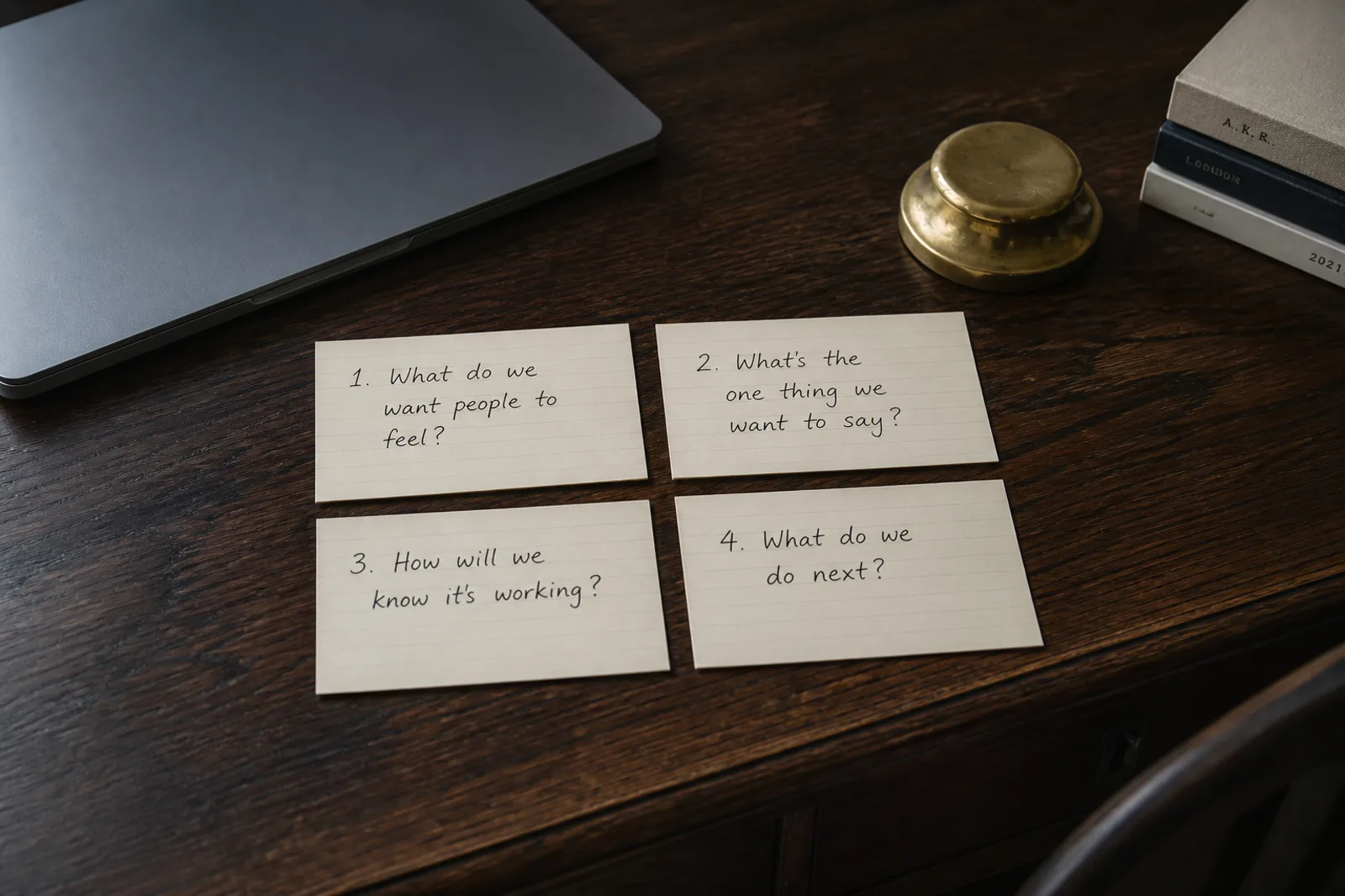
We turn down more automation work than we take. Not because the technology does not work, but because the request usually describes a symptom rather than a problem, and automating a symptom is expensive.
The first question is: who is doing this now, and how often? If the answer is a named person doing a specific thing more than twenty times a week, there is probably something worth building. If the answer is a category rather than a person, or a task that happens twice a month, there is not. The economics of automation are entirely about repetition, and a task nobody currently does at volume will not suddenly become one.
The second is: what happens today when it goes wrong? Every process has a failure mode, and somebody usually catches it informally without realising they are the control. If you cannot name who catches the mistakes now, automation will not remove that person, it will remove the catching. We have seen a lead routing system work perfectly for four months and then quietly misfile a category of enquiry for six weeks, because the person who used to notice was no longer looking.
The third is: does a customer see the output unedited? If yes, we will build a drafting step and an approval step, and we will tell you that the approval step is not optional and cannot be automated later. Most disappointment with AI content comes from teams who built the drafting half and then skipped the review because volume felt like the point.
The fourth is the one that ends most conversations: if we built nothing, what would you fix first? Surprisingly often the honest answer is the sales process, the data quality, or a decision nobody wants to make. All three are cheaper to fix than to automate around, and none of them is a technology problem. When that is the answer, we say so, and we would rather lose the project than build something that makes an unresolved problem run faster.
None of this is scepticism about the tools. We use them every day and there are three places they reliably pay for themselves: reading and routing inbound enquiries, first drafts of repetitive copy, and summarising activity across systems that do not talk to each other. What we resist is buying the tool before answering the four questions, which is the order most of this gets done in.
Written by Amara Sesay